

Case Studies
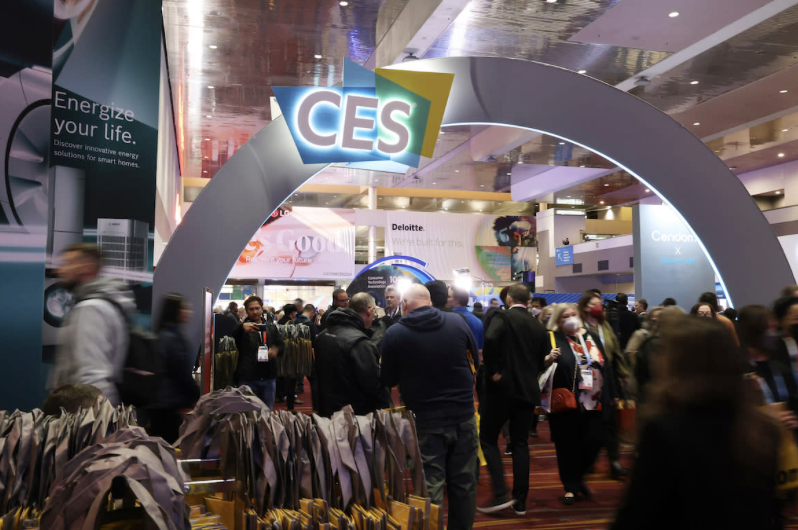
Case Study: Turning a $350,000 Tradeshow Into $1.9M in Pipeline
CES isn’t just a tradeshow — it’s roughly 150,000 attendees, three days of nonstop competition for attention, and a flagship moment where marketing, sales, and executive leadership all need to be pulling toward the same outcome at the exact same time. With a $350,000 budget and the company’s biggest annual show on the line, there was no room for “we’ll figure it out on-site.” Every dollar and every meeting slot needed to be working toward a real business outcome — not just booth traffic and swag giveaways
At this scale, the risk is showing up and having nothing to show for it afterward.
Big tradeshows create a specific set of problems:
- Misalignment between departments. Marketing wants social engagement and brand visibility. Sales wants qualified meetings. Executives want a clear ROI story. Without one person owning the full strategy, these goals compete instead of compound.
- Leads that go nowhere. It’s easy to collect hundreds of business cards and scanned badges at a show this size — and easy for most of them to sit untouched in a spreadsheet or CRM afterward, with no qualification process and no fast follow-up.
- Budget bloat. Vendor and venue contracts at this scale carry enormous room for overspend if they aren’t negotiated with real leverage and oversight.
- No way to prove it was worth it. Without clean data translation, leadership is often left asking “was this actually worth the investment?” with no confident answer.
- Owned the full strategy, not just the logistics. We led event strategy and execution end-to-end, aligning marketing, sales, and executive leadership around shared pipeline objectives, onsite engagement targets, and a clear post-show conversion strategy — so every team walked in working toward the same result.
- Negotiated vendor and venue contracts aggressively. We delivered the event 3% under budget — without cutting program quality or scaling back the experience.
- Built a real engagement engine, not just a booth. We helped the sales team orchestrate a combined pre-booked and on-site meeting strategy that produced 137 sales meetings across the show.
- Made sure no lead was wasted. We implemented lead qualification and CRM integration that achieved 100% lead capture and 24-hour sales follow-up — turning show-floor conversations into an active pipeline instead of a bunch of business cards in a fish bowl.
- Proved the ROI, in numbers leadership could act on. We translated full event performance into a clean ROI snapshot through the CRM, giving key stakeholders a clear comparison against the rest of the year’s events to guide next-year investment and optimization decisions.
- $1.9M in pipeline created, $5.1M in pipeline influenced — from a single show
- 137 onsite meetings, 52 SQLs, and 100% lead capture with same-day-to-24-hour follow-up
- Delivered 3% under budget
- A clear, CRM-backed ROI story leadership could use to make next year’s investment decision with confidence
A tradeshow at this scale can either be a black hole for budget or one of the highest-leverage moves a company makes all year — and the difference almost always comes down to whether someone is managing the whole picture: strategy, budget, execution, and the follow-through that turns a show floor conversation into real pipeline. That’s the value of bringing in a firm like Johnnie & Co. Events who’s run this exact playbook before — not just executing a booth presence, but owning the outcome, from the first vendor negotiation to the ROI report that lands on the executive team’s desk months later.
Case Study: How We Grew Restaurant Sponsorship 26% for a 2,000-Guest Black-Tie Gala
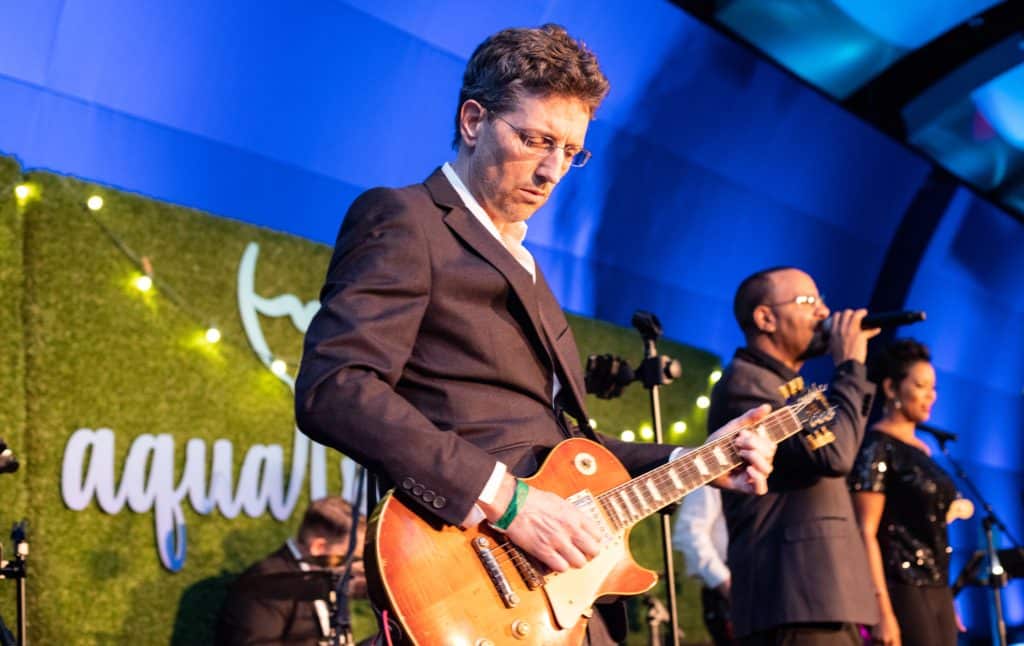
A 2,000-guest black-tie fundraiser at the Georgia Aquarium. Five hundred different wines. Bites from more than 50 restaurants. A live band. A live auction. The largest great whale shark in America (37 feet long!) swimming in a tank holding 6.3 million gallons of saltwater. The kind of event where there’s no “small” version of anything being produced — or going wrong — because there are 1,000 people watching.
The client’s internal marketing team had the vision. What they didn’t have was the bandwidth. They were already quite busy running the largest nonprofit aquarium in America. An event of this scale — with nearly 100 vendor relationships and 1 night to get it all right — wasn’t something that could be expertly managed on top of a full-time job.
So they brought Johnnie & Co. Events in.
This wasn’t a list of restaurants who showed up — it was 50+ businesses we convinced to donate a massive amount of food (i.e. money), time, and energy to — during the busy fall season no less. It was contacting hundreds and hundreds of restaurants, fifty-plus individual negotiations, fifty-plus sets of expectations, fifty-plus marketing collateral packages, and fifty-plus load-in schedules that all had to land at the same venue, on the same night, without colliding at the loading dock.
Add 500 wine selections from around the world, a live band with dancing, and a live auction running simultaneously, and the real challenge wasn’t any single element — it was making sure all of it moved in sync, invisibly, while 1,000 guests in black tie experienced none of the effort behind it.
We took over the parts of the event that created the most risk and the most stress for the marketing team: sponsorship, vendor coordination, and execution.
- Restaurant sponsorship, from the ground up. We didn’t just manage the restaurants already on board — we actively grew the sponsor base, securing agreements from partners who hadn’t been part of the event ever before.
- 75+ vendor relationships, one coordinated system. Every vendor had their own logistical needs, and its own internal team. We managed each one individually while keeping the full group moving toward the same night, the same high standards, and the same timeline.
- Load-in, choreographed to the minute. With 50+ restaurants and 25+ vendors converging on one loading dock, we knew timing would make or break the entire event. We built and ran a load-in schedule precise enough that every restaurant arrived, set up, and was ready to serve without a bottleneck, a delay, or a scramble.
- Wine, band, auction — running in parallel, not in conflict. With 500 wine selections, live entertainment, and a live auction all happening under one roof, we made sure each element had its own lane, so nothing pulled focus from the moment guests were meant to be having.
By increasing restaurant sponsorship by 26%, we were able to help Georgia Aquarium raise $120,000 within one single evening — turning what could have been a cost center into a stronger revenue and partnership channel for the event, while every one of the 50+ restaurants was successfully managed from initial agreement through same-night execution.
The event came off without a guest ever seeing the machinery behind it. No bottlenecks at the dock. No vendor confusion or details just being finalized that day. No moment where the night felt like it was being held together by the seams of an overworked department. It was being run by Johnnie & Co. Events, and we believe first and foremost that your event should be exceptional.
This is the gap most companies don’t realize they’re standing in until it’s too late: your team can have the vision for an incredible event, and even have previous experience in pulling an event of that scope off, but still not have the hours, the vendor relationships, or the on-the-ground execution muscle it takes to pull off an event of that scale requires.
That’s not a failure of your team. It’s a mismatch between what an event of this size actually requires and what any one internal team — already running the business — can realistically take on.
We exist for exactly this moment: when you want the event to be an exceptional success, and you want it partially or entirely off your teams plate. Not managed from a distance. Not “checked in on.” Planned for and produced — start to finish, vendor by vendor, minute by minute — so that your team is not at the loading dock sweating the load-in schedule, but instead walking into the room as guests.
Case Study: The Logistics Behind a Flawless Multi-Day Leadership Summit
26 internal meetings. One headquarters. A majority of participants flying in from their own homes across the country, all converging on the same building, the same week, with schedules that had to interlock perfectly. On paper, it looks like a calendar problem. In reality, it’s a logistics operation with dozens of moving parts — and if any one of them slips, it doesn’t just affect one meeting. It cascades the entire week.
The real difficulty wasn’t any single meeting — it was the architecture underneath all of them.
Twenty-plus meetings meant twenty-plus sets of attendees, and several key people were needed in numerous meetings. That meant the entire schedule had to be built like a puzzle: no two meetings requiring the same essential person could ever be scheduled at the same time — not once, across the whole week.
Layer on top of that: C-suite flights and hotels to coordinate, booking catered breakfast and lunches to keep people fed and focused, dinner reservations to lock in every single night (for multiple different groups), and protecting participants from meeting fatigue by scheduling in actual breaks, not just gaps on paper.
And then, less than 24 hours before it needed to happen: a request for a mixer from the CEO between the C-suite and all onsite sales pros — with no existing plan, no advance notice, and no room for it to feel improvised.
- Engineered the master timeline. We built the full meeting schedule from scratch, mapping every attendee against every session to guarantee zero conflicts — no key person ever double-booked, no meeting ever waiting on someone stuck in another room.
- Managed C-suite travel end to end. Flights and particular travel logistics (“must be a first class window seat leaving no later than 11AM”) for the C-suite were handled fully, so leadership could focus on the meetings themselves, not their itineraries.
- Fed the entire group, every day. Breakfast and lunch were catered daily — including thoughtful snacks like a gourmet acai bowl and smoothie day — keeping energy and morale up through a demanding week, not just checking a box on catering.
- Booked dinner, every night, for multiple different groups. Restaurant reservations were secured each evening, giving out-of-town attendees a genuine landing spot after long meeting days.
- Built in real recovery time. Adequate breaks were placed between meetings deliberately — not as an afterthought, but as part of the timeline architecture, so people showed up sharp instead of running on fumes.
- Delivered a mixer under a 24-hour deadline. A request came in for a C-suit and sales team mixer with less than a day’s notice from the CEO—and it needed to be private and closed to the public. We did the following: secured a fun Western themed bar that was a 5 minute walk from the office within hours of the request, created a digital invitation that went out through the company’s email with all pertinent details, and even added a check-in table so we could track participation. It was a last minute event that didn’t feel last-minute to a single person in the room.
A full week of 26 interlocking meetings ran without a single scheduling collision. The C-suite traveled seamlessly. Every attendee was fed well, rested appropriately, and had somewhere good to go each night. And when leadership needed something impossible on 24 hours’ notice, we made sure it happened anyway — smoothly enough that sales people in the room had no idea it wasn’t part of the original plan to begin with.
The week wasn’t just successful. It was, by design, actually enjoyable — for a group that flew in from all over the country to sit in back-to-back meetings all week.
This is the kind of week that quietly makes or breaks how a leadership team feels about the whole operation and the company as whoe — and it’s almost impossible to run well without someone dedicated entirely to the logistics underneath it.
It’s not just about booking rooms and ordering lunch. It’s about seeing the whole week as one interconnected system — where a scheduling conflict, a travel delay, or a last-minute request can throw off everything downstream — and building it so none of that ever touches the people in the room. That’s the difference between an internal event that happens to your team, and one that actually works for them.
Case Study: The Event That Was Called a “Client Appreciation” Event, Looked Like a Festival, and Ran Like a Well-Oiled Machine
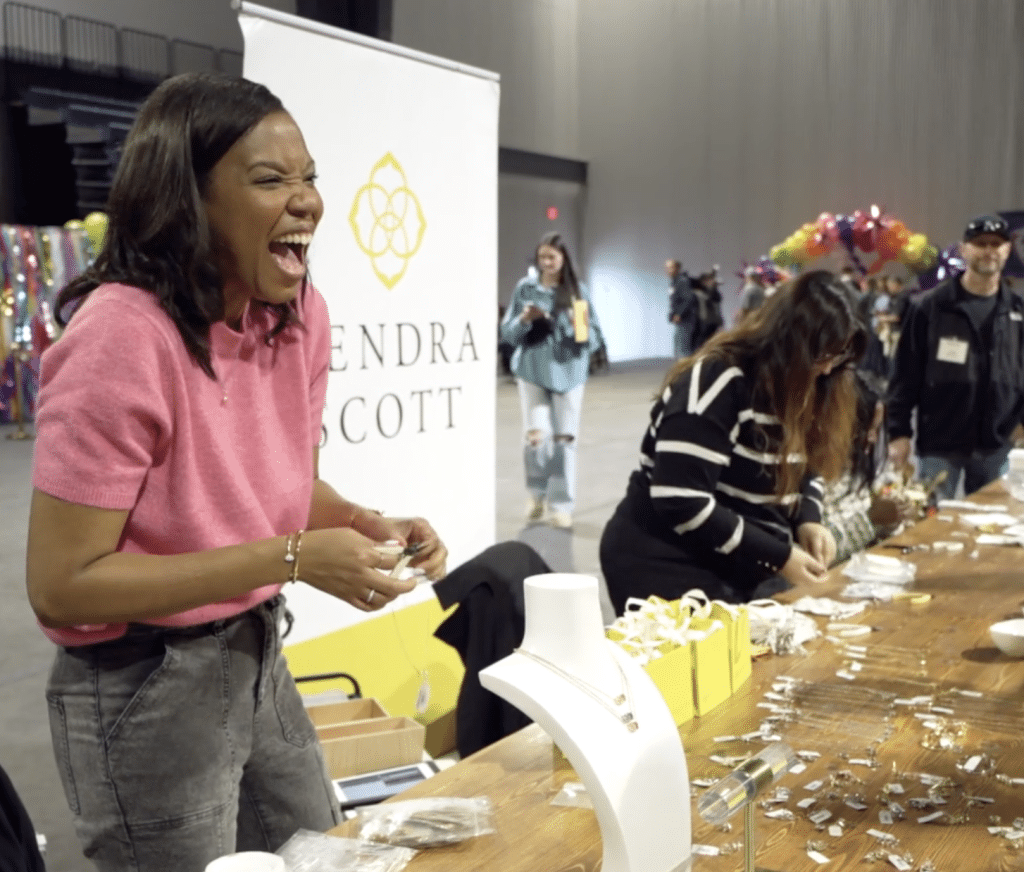
A 750-person customer and employee appreciation event, themed around fall — but this wasn’t a few pumpkins and a hot cider bar. This was 25 vendors — multiple food trucks, a Kendra Scott jewelry-making bar, ax throwing, a massive football screen and lounge, a kids’ jumpy, baby soft play, circus acts, a caricature artist, a flower-making bar, digital golf, and a live DJ — all running at the same time, for the same crowd, in the same space. On paper, it was a “client appreciation” event. In reality, it was a small festival.
Events with this many simultaneous activations tend to run into the same handful of problems, again and again:
- Traffic flow chaos. With that many high-interest stations, guests naturally cluster around the “exciting” activities (ax throwing, the jewelry bar, the football lounge) and ignore the rest — creating long waits in some corners and dead zones in others.
- Age-range whiplash. A single event trying to entertain adults playing golf and babies in soft play and kids in 4 different jump houses and obstacle courses is really three or four events happening at once — each with different safety needs, different staffing needs, and different physical footprints.
- Vendor overload. Ten-plus distinct activations means ten-plus vendors, each with their own setup time, power/space requirements, and staff — any one of which can throw off the whole layout if it’s not planned with precision.
- Budget creep. Events with this many “wow factor” elements are exactly the kind that tend to balloon in cost, as each individual activation gets priced and added without anyone managing the full picture.
- Designed the layout around flow, not just fun. Every activation was placed with intention — high-traffic draws spaced apart, natural sightlines guiding guests through the whole footprint instead of bottlenecking around the flashiest stations.
- Zoned the event by audience. Kids’ jumpy and baby soft play were positioned together and separated from ax throwing and the football lounge, so families could relax knowing their kids were safely contained while the adult-oriented activities ran without interruption nearby. A nannying service was hired to bring in numerous additional eyes and ears for safety within the kids area.
- Managed 25 vendors as one coordinated system. Every single vendor — from the food trucks to the photographer to the venue — was scheduled, briefed, and positioned so setup, power needs, and staffing never collided. The day ran as one seamless experience instead of 25 separate ones bolted together.
- Watched the budget the entire way through. With this many high-cost activations in play, we tracked spend at every stage of vendor negotiation and execution — and came in under budget, without cutting a single planned experience.
750 guests moved through ten-plus activations — from ax throwing to a caricature artist to a football lounge — without a single bottleneck, safety concern, or vendor conflict. Everyone from single bachelors to families with babies had a great afternoon, at the same event, at the same time.
And the event came in under budget — proof that “more going on” doesn’t have to mean “more expensive” when it’s planned with real precision.
Most companies look at an event with this many moving pieces and assume it has to be stressful, expensive, or both. The truth is, the complexity isn’t the problem — the lack of a system for managing it is. This is the kind of event — big, layered, and full of “wow” moments — that looks impossible to run smoothly from the outside, but that comes together perfectly when a firm like Johnnie & Co. is steering the ship.